A working notebook · est. 2024
if you are also into health, ai, macro, and history, you will find interesting stuff here.
Open the notebook →
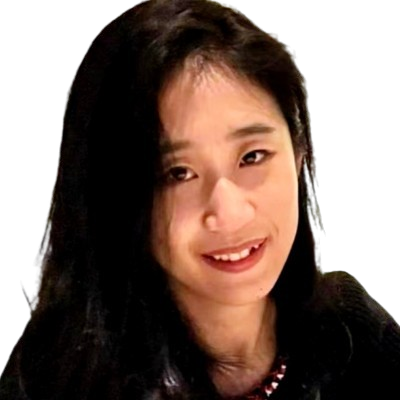
Hi, I'm Wendy. I'm an engineer by training, explorer at heart. I work on enabling AI to drastically improve how we live.
The foundational questions for getting there:
I don't have clean answers. This notebook is where I work them out.
I did my PhD in Computer Science at Duke, advised by Prof. Alberto Bartesaghi, where I worked on using AI to help us understand protein structures better. Before that, I did my undergrad in biomedical engineering at Johns Hopkins. I spent time at Bain doing AI strategy and private equity work. After Bain, I built and sold AI tools to make private equity work less manual.
Outside of work, I enjoy reading, running, supporting my favorite sports teams, and spending quality time with my cat.
Some quotes I like:
Fear is the mind-killer.
— Frank Herbert, Dune
長空不礙白雲飛
— 石頭希遷
Peptides are short amino-acid chains that can signal hunger, pain, blood pressure, and more; longer ones are polypeptides, and folded functional chains are proteins. Build one—or meet a famous one.
Pick a famous peptide below for a tiny biology note.
a peptide is just amino acids holding hands.
"First principles" is tech's favorite phrase. It tends to break the moment it meets biology
What a year of building — from YC to starting over on my own — taught me about people, customers, trust, and judgment.
The vice triad behind breakout consumer products, and why AI sits on all three.
Automakers, battery manufacturers and governments are racing to capture the next wave of battery revolution. Solid-state battery seems to be a one-stop solution, but how far are we?
A logo-wall and competitive-landscape builder for consulting and investment decks — turning a list of companies into a polished, editable PowerPoint slide.
Private-equity-style PowerPoint automation software for AI agents and recurring workflows. It generates editable, brand-consistent slides from templates and structured data.
Makes single-particle cryo-electron tomography practical at scale: an end-to-end framework from raw tilt-series processing through high-resolution refinement and classification, designed to avoid bulky intermediate datasets.
Introduces a two-stage, self-supervised pipeline that mines recurring molecular patterns in crowded cryo-ET data, then localizes proteins from sparse labels—reducing manual annotation and supporting diverse molecular targets.
Automates cryo-EM specimen screening with deep-learning feature detection and classification, plus a web interface for remote microscope control, annotation, and iterative model improvement.
Small pauses from the road: places, animals, and moments I wanted to keep.
I'd love to chat. I've also done a lot of guidance and advising work, so feel free to reach out.
New notes in your inbox — no spam, unsubscribe anytime.
